
🌊 Uvs Lake
The Wild Heart of Western Mongolia
🌊 Uvs Lake – The Wild Heart of Western Mongolia
Uvs Nuur is Mongolia’s largest saline lake and one of the most ecologically important landscapes in Central Asia. Located in Uvs Province, near the border with Russia, the lake forms the core of the Uvs Lake Basin, a vast natural region recognized as a UNESCO World Heritage Site for its exceptional biodiversity and intact ecosystems.
Remote, powerful, and breathtakingly diverse, Uvs Nuur represents the true spirit of western Mongolia—where deserts, mountains, wetlands, and nomadic culture coexist.
📍 Geography & Landscape
Uvs Nuur lies within the Great Lakes Depression, surrounded by an extraordinary variety of landscapes:
- 🏜️ Semi-desert and sand dunes to the south
- 🌾 Steppe grasslands and river deltas
- 🏔️ Snow-capped Altai and Sayan mountain ranges
- 🌊 Vast open water with salt flats and marshes
The lake has no outlet, making it saline. Its size and shallow depth create dramatic shorelines that change with seasons and water levels.
🌦️ Climate & Natural Environment
Uvs Lake experiences an extreme continental climate:
- ☀️ Hot, dry summers
- 🍂 Cool, windy autumns
- ❄️ Very cold winters (the lake freezes solid)
- 🌡️ Large day–night temperature variations
This harsh climate has preserved the region’s ecosystems in near-pristine condition, with minimal human impact.
🐦 Wildlife & Birdlife
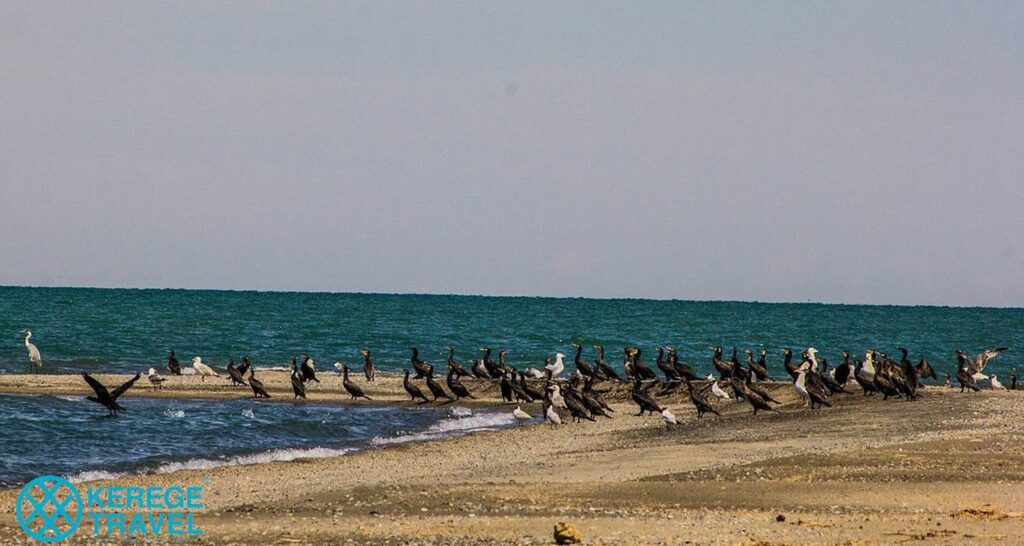
Uvs Lake is one of Asia’s most important bird habitats and a key stopover on major migratory routes.
Notable wildlife includes:
- 🦆 Hundreds of species of migratory and resident birds
- 🦅 Raptors and steppe eagles
- 🦢 Swans, cranes, and waterfowl
- 🐺 Mammals such as foxes, wolves, and small desert species
For birdwatchers and wildlife photographers, Uvs Lake is among Mongolia’s top destinations.
🐪 Nomadic Life & Cultural Heritage
Nomadic herders have lived around Uvs Lake for centuries, practicing seasonal migration with their livestock:
- 🐑 Sheep and goats
- 🐎 Horses
- 🐄 Cattle
- 🐫 Camels in drier zones
🏕️ Families live in traditional gers (yurts) and move according to pasture and weather conditions. Life here follows ancient rhythms shaped by water, wind, and land.
Visitors can experience:
- Authentic nomadic hospitality
- Traditional dairy products
- Herding life in one of Mongolia’s harshest environments
🚶 Things to Do
Uvs Lake is ideal for travelers seeking nature, solitude, and authenticity:
- 🚶 Lakeshore exploration & walking
- 🐦 Birdwatching and wildlife observation
- 📸 Landscape & nature photography
- 🏕️ Camping or nomadic homestays
- 🌌 Stargazing under pristine night skies
The region is especially attractive to expedition-style travelers and photographers.
📸 Photography Opportunities
Uvs Lake offers powerful photographic scenes:
- 🌅 Sunrises and sunsets over the lake
- 🌊 Reflections on salt flats and wetlands
- 🐦 Birds in flight across open skies
- 🏜️ Desert-meets-lake compositions
Each season transforms the lake’s mood, colors, and wildlife activity.
🗓️ Best Time to Visit
- 🌱 June – August: Warm weather, peak birdlife, best access
- 🍂 September: Clear skies, cooler temperatures, excellent photography
⚠️ Winter travel is possible but extremely challenging due to severe cold.
⭐ Why Special
✔️ Mongolia’s largest lake
✔️ UNESCO World Heritage–listed ecosystem
✔️ Exceptional biodiversity and birdlife
✔️ Remote, untouched landscapes
✔️ Authentic nomadic culture
Uvs Lake is not just a destination—it is a living natural system where water, desert, mountains, wildlife, and people remain in rare balance.
🧭 Travel Tips
- 🤝 Respect wildlife and nomadic land use
- 🚙 4WD vehicle required
- 🧭 Travel with a local guide for safety and navigation
- 💧 Bring sufficient water and supplies