
🐆 Snow leopard Mongolia, The Ghost of the Altai Mountains
The snow leopard is one of Mongolia’s most iconic and mysterious animals, often called the “Ghost of the Mountains”. Perfectly adapted to life in extreme alpine environments, this rare big cat inhabits the high, rugged landscapes of western Mongolia, especially the Altai Mountains.
🐾 The Elusive Snow Leopards of Mongolia
Snow leopards primarily hunt Altai Argali sheep and Siberian ibex, despite being only about a quarter of their prey’s size. Using steep, rocky terrain to their advantage, they ambush prey from higher elevations. When large prey is scarce, they may also hunt marmots, birds, deer, and occasionally domestic livestock.
- ⚖️ Weight: 27–55 kg (60–120 lbs)
- 📏 Tail: Almost as long as the body, used for balance and warmth
- 🧥 Fur: The thickest of any cat species, ideal for freezing climates
- 🏔️ Habitat: High mountains of Central Asia—from the Himalayas to the Siberian Altai
Snow leopards are solitary and extremely elusive, making sightings very rare. Most encounters are limited to tracks or camera-trap images. Globally, there are an estimated 4,000–6,000 snow leopards, with approximately 500–1,000 living in western Mongolia, making the Altai one of their most important remaining strongholds.
Protected areas such as Altai Tavan Bogd National Park provide critical habitat for this endangered species. For many travelers, simply knowing that snow leopards still roam these mountains adds a powerful sense of wildness and wonder to the Altai experience.
🐆 Snow Leopards in Jargalant Khairkhan, Western Mongolia
🏔️ A Rare and Elusive Apex Predator
Snow leopards (Panthera uncia) are among the most iconic and enigmatic carnivores of Central Asia’s high mountains. Mongolia is home to the second‑largest snow leopard population in the world, with around 950–1,000 individuals distributed across rugged ranges like the Altai, Gobi‑Altai, and Khangai Mountains.
The species prefers steep, broken terrain, rocky ridges, and cliff edges—habitats that offer camouflage and hunting advantage across elevations from roughly 1,800 to over 4,000 meters.
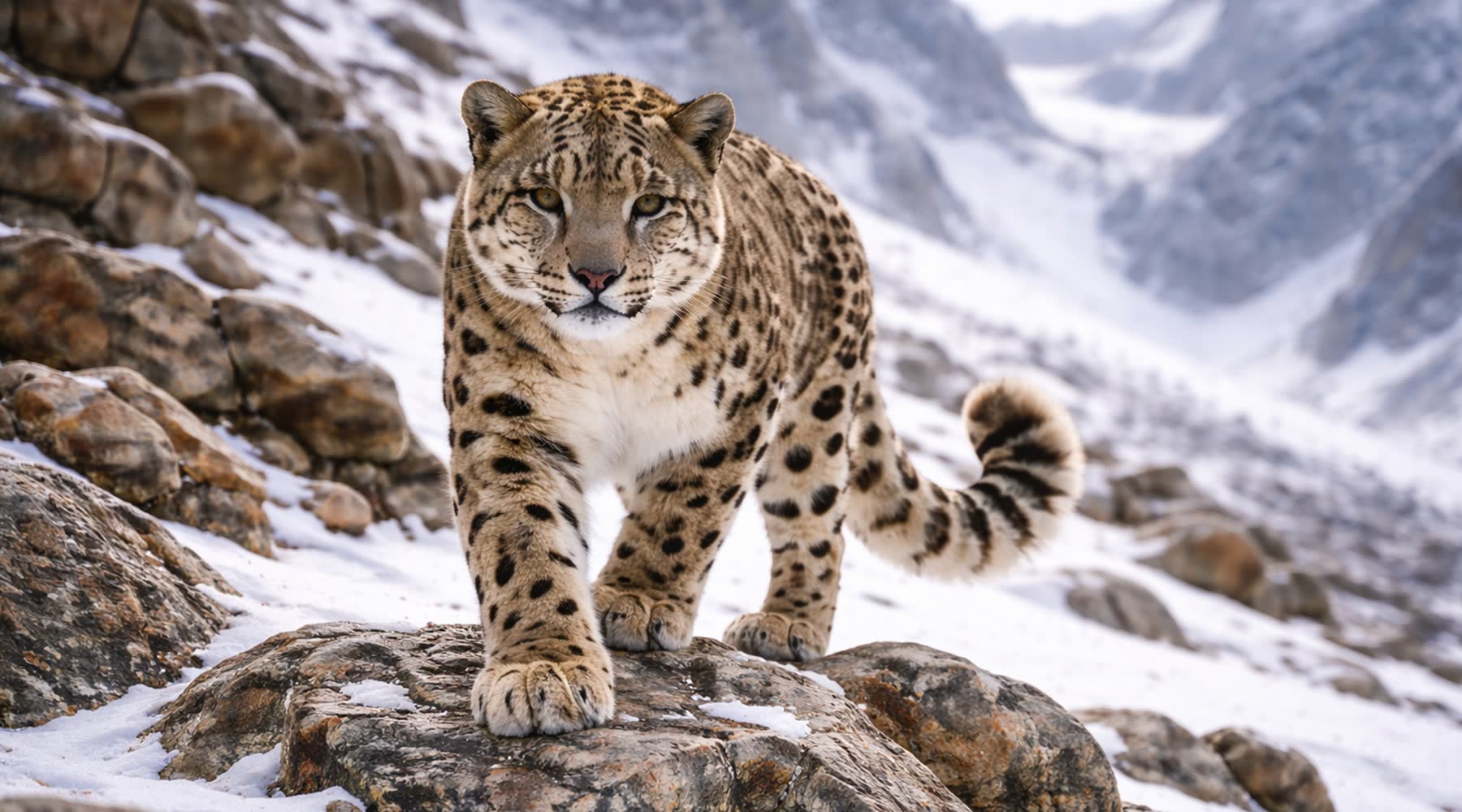
📍 Jargalant Khairkhan: A Stronghold of Snow Leopard Activity
In Khovd Province, the Jargalant Khairkhan mountain range is known as a stronghold for snow leopard populations. Research shows that snow leopard signs—such as scrapes, scent marks, and camera‑trap images—are particularly concentrated in remote, inaccessible parts of this range, especially where human disturbance is minimal.
Camera and field studies in the central parts of Jargalant Khairkhan have captured multiple snow leopards and documented high levels of marking activity, suggesting the area supports both resident adults and younger individuals.
Animals like Siberian ibex and other wild prey in these mountains provide the ecological base that helps sustain snow leopard presence in the region.
🐾 Behavior, Diet & Habitat
Snow leopards are solitary, territorial, and highly adapted to cold alpine ecosystems. They typically hunt from higher ground, using steep slopes and rocky cover to stalk and ambush prey.
Their diet in western Mongolia primarily includes:
- Argali sheep
- Siberian ibex
- Marmots, hares, and smaller mammals …along with opportunistic feeding on other available prey.
Despite being powerful hunters, snow leopards are rarely seen, even in areas where they occur. Most encounters are via camera traps or indirect signs such as tracks and scrapes.
🌿 Conservation Status & Challenges
🐾 National Importance
Mongolia’s snow leopard population accounts for a significant portion of the global species count—estimated at around 20% of the worldwide total.
The species is protected under Mongolian law and listed as endangered internationally.
⚠️ Human–Wildlife Conflict
In the Jargalant Khairkhan area, interactions between snow leopards and nomadic herders occasionally lead to livestock losses, as big cats sometimes prey on sheep or goats. Cases of herders’ livestock being taken have been reported, and efforts continue to balance conservation with pastoralist livelihoods.
🛡️ Conservation Efforts
Conservation groups such as WWF Mongolia and local communities have documented snow leopards via camera traps in Jargalant Khairkhan and implemented initiatives to reduce threats such as illegal traps. Programs involving trap exchanges with herder families have shown early promise in reducing risks to both wildlife and livestock.
📸 Seeing Snow Leopards (In Theory)
Although glimpses of a live snow leopard in the wild are extremely rare, guided wildlife tours focused on the Altai and Jargalant regions can give visitors a chance to explore the big cat’s habitat and find tracks, markings, and indirect signs of their presence.
⭐ Snow leopard Mongolia
| Feature | Detail |
|---|---|
| International Status | Endangered |
| Population in Mongolia | ~950–1,000 |
| Key Mountain Ranges | Altai, including Jargalant Khairkhan |
| Main Prey | Argali, ibex, marmots |
| Habitat | Rocky cliffs, ridges, alpine zones |
Snow leopards remain one of the most mysterious and treasured animals in Mongolia’s wild mountains. Their survival in challenging high‑altitude landscapes like Jargalant Khairkhan reminds us of the fragile balance between nomadic life, livestock grazing, and big‑cat conservation.