
🏔️ Mongolian Kazakh Nomads
Home to Mongolia’s Kazakh community, where nomadic life, rich traditions, and warm hospitality thrive.
👥 Ethnic Identity & Population
Bayan-Ulgii is a unique region of Mongolia and the homeland of the Kazakh ethnic group. Kazakhs are the second-largest ethnic group in Mongolia, numbering around 101,000 people, or 5% of the national population. Nearly 90% of Bayan-Ulgii’s residents are Kazakh, giving the province a strong and distinct cultural identity.
The aimag was officially established in 1939 as a semi-autonomous homeland for Kazakhs living in Mongolia. Today, Kazakh is the primary spoken language, while Mongolian is used for official and inter-ethnic communication. Islam is the main religion practiced by the Kazakh community.
📜 Historical Origins about Mongolian Kazakh Nomads
The Kazakhs trace their roots back to the 15th century and the formation of the Kazakh Khanate, founded by descendants of Chinggis Khaan near the Aral Sea in present-day Kazakhstan. The Kazakh people emerged from a mix of Mongol and Central Asian nomadic tribes and quickly developed a powerful and distinct identity.
By the 18th century, the Russian Empire began absorbing Kazakh lands. During this time, many Kazakhs fled to the remote Altai Mountains of Mongolia and western China. Later, Soviet and Chinese borders isolated Mongolian Kazakhs from their relatives until the early 1990s. While traditional nomadic life was suppressed elsewhere, it survived in Mongolia’s vast steppes and mountains.
After Kazakhstan’s independence, about half of Mongolia’s Kazakhs migrated there, though many eventually returned. Today, families maintain close ties across borders.
🐑 Nomadic Herding Lifestyle
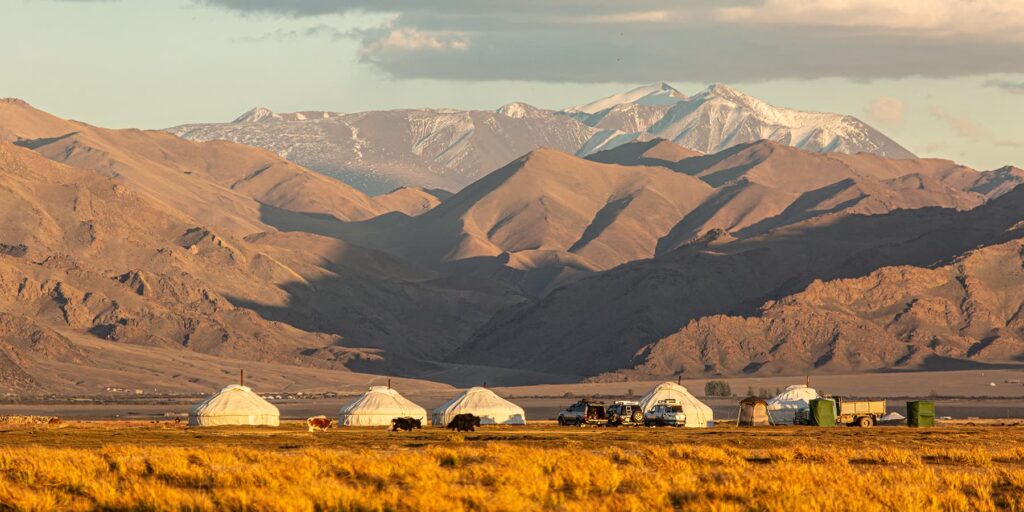
Many Kazakhs in Bayan-Ulgii continue a semi-nomadic herding lifestyle, moving seasonally with their livestock. During summer, families live in Kazakh-style gers (yurts), which are taller and more spacious than Mongolian gers.
Family bonds are central to Kazakh life. One important tradition forbids marriage within nine generations, so people often begin conversations by explaining family lineage and connections.
🧵 Art, Crafts & Symbolism
Kazakhs are world-famous for their intricate embroidery and textile art. A traditional ger is decorated with hand-stitched wall hangings (tuskies), often 5–7 pieces per home, each taking up to 200 hours to complete.
The flowing patterns are inspired by goat horns, symbolizing wealth and prosperity. These designs appear on clothing, carpets, saddles, and household items, forming a strong visual identity of Kazakh culture.
🎶 Music, Hospitality & Celebrations
Kazakh hospitality is legendary. Guests are welcomed with generous meals, endless cups of milk tea, sweets, and heartfelt conversation. Music is a vital part of life—especially songs played on the dombra, the traditional two-stringed instrument, echoing stories of Central Asia’s great warriors.
Despite the harsh environment, Kazakhs celebrate life with music, dancing, horse games, and festivals. The most important celebration is Nauryz, the Kazakh New Year, held in March, symbolizing renewal and spring.
☕ Visiting a Kazakh Family
No visit to Bayan-Ulgii is complete without visiting a Kazakh family. Share tea, enjoy traditional dishes like kazy (horse-meat sausage) and beshbarmak (“five fingers”), and experience genuine warmth and laughter.
By the time you leave, you will be treated like family—and you will never forget the hospitality, pride, and spirit of the Kazakh people.