
🐆 Mongolian Snow Leopard Photography Expedition 13 Days tour
📍 Western Mongolia | Altai Mountains | Wild Life | Snow leopard | Altai Tavan Bogd national park
🐆📸 About the Mongolian Snow Leopard Photography Tour
This Snow Leopard Photography Tour is a rare, conservation-focused expedition into the heart of the Altai Mountains, designed for photographers and wildlife enthusiasts seeking an authentic chance to encounter one of the world’s most elusive big cats.
The tour is operated by the Discover Altai team in close cooperation with the local
Association of Environmentalism and Tourism (Snow Leopard Conservancy). Our field team is entirely local and highly experienced, consisting of:
- An English-speaking expedition guide
- A local herder and tracker with deep knowledge of the land
- A snow leopard expert working with a state conservation organization
This combination of local knowledge, scientific expertise, and ethical practice greatly increases the chances of successful tracking while ensuring minimal impact on wildlife.
🔍 Deep-Search & Professional Tracking
After your arrival date is confirmed, our snow leopard tracking team begins research and monitoring about one week in advance. This preparation allows us to identify fresh signs, movement patterns, and the most promising areas—so we are ready the moment your expedition begins.
During the tour, you will travel with professional spotters and trackers, scanning ridgelines, cliffs, and valleys using binoculars and spotting scopes. This is a true field expedition focused on real tracking, not staged encounters.
🌍 Conservation at the Core
We work only with trusted conservationists, researchers, and field teams, not just to find snow leopards—but to protect them and their fragile environment. By joining this tour, you directly support local conservation efforts and community-based wildlife protection.
📍 Key Snow Leopard Photography Areas
There are two main regions where snow leopard encounters are most likely:
- Siilkhemiin Nuruu (Saylyugem Mountains) Located in the southeastern Altai Mountains, this rugged range is one of Mongolia’s most important snow leopard strongholds, known for steep cliffs and healthy prey populations.
- Khukh Serkhiin Mountain (Protected Area) A designated protected area with restricted access, offering a quiet and undisturbed habitat ideal for snow leopard movement and observation.
In addition to snow leopards, photographers may also encounter Pallas’s cat, ibex, argali sheep, foxes, and birds of prey—adding depth and variety to the expedition.
🏕️ What’s Included
The expedition price includes all transportation, accommodation, and meals throughout the tour, allowing you to focus entirely on tracking, photography, and the experience itself. Accommodation ranges from local hotels to heated traditional gers in remote mountain camps.
✨ A Once-in-a-Lifetime Experience
This is more than a photography tour—it is a true wildlife expedition built on patience, expertise, and respect for nature. Every day in the field brings the possibility of witnessing the “Ghost of the Mountains” in its natural realm, creating images and memories that few people on Earth will ever experience.
🐾 If you are looking for authenticity, conservation ethics, and the best possible chance to photograph wild snow leopards, this tour is designed for you.
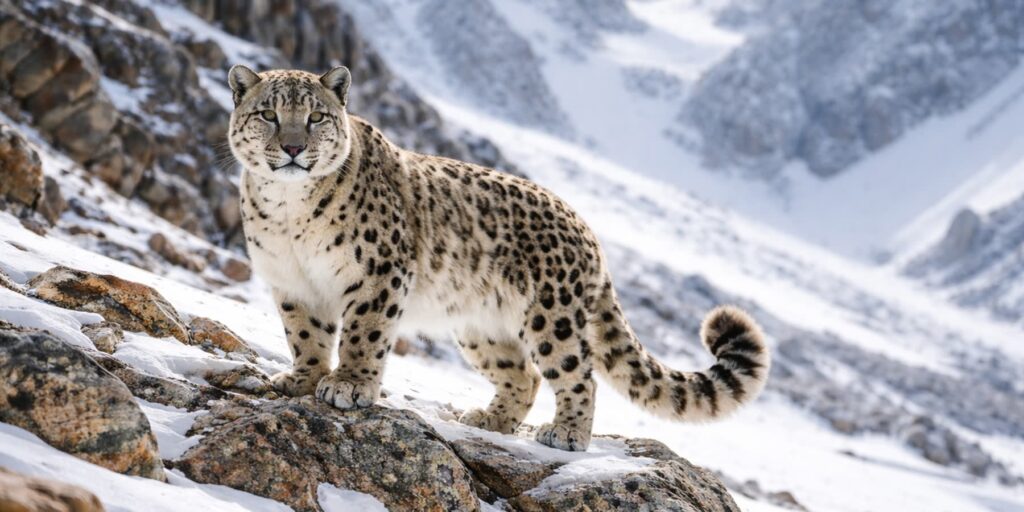
🐆 Snow Leopard Populations in Mongolia
🌍 Second Largest Population in the World
Mongolia is home to the second-largest wild snow leopard population globally, second only to neighboring China. This makes the country extremely important for the species’ long-term survival and conservation.
📊 Population Size & Distribution
Recent nationwide surveys estimate Mongolia’s snow leopard population at about 800–1,127 individuals, with figures often centered around ~950 adults. These big cats are found across vast mountain systems, including the Altai, Gobi-Altai, Khangai, Harhiraa, and Turgen ranges stretching over more than 100,000 km² of habitat.
🏞 Habitat & Range
Snow leopards inhabit remote alpine and subalpine zones, typically at high elevation where prey such as Siberian ibex and argali sheep thrive. Mongolia’s rugged terrain provides ideal terrain for stealthy movement, including rocky ridges and deep snowfields where these cats hunt and range.
📈 Population Status
Surveys indicate that Mongolia’s population is relatively stable, an encouraging sign that current conservation efforts—like protected areas and community ranger programs—are helping maintain this iconic species despite threats like habitat loss and human-wildlife conflict.
✨ Global Context
Across its entire range in Central and South Asia, the global wild snow leopard population is estimated in the thousands. Within this broader picture, Mongolia’s stronghold is crucial to the species’ continued survival.
In summary: Mongolia plays a key role in snow leopard conservation, hosting one of the largest, most stable populations of these elusive “ghosts of the mountains,” spread across expansive high-altitude landscapes.
🐆📸 Highlights – Snow Leopard Photography Tour
- ⭐ One of the Best Snow Leopard Destinations on Earth: Photograph snow leopards in Mongolia’s Altai Mountains, a global stronghold for the species with some of the highest success rates for tracking.
- ❄️ Winter = Prime Photography Season: Snow-covered landscapes reveal tracks and movement, creating ideal conditions for spotting and photographing the elusive “Ghost of the Mountains.”
- 🔍 True Deep-Search Expedition: Not staged, not rushed—this is a real tracking expedition with local rangers, involving scanning ridgelines, following fresh signs, and long observation sessions.
- 📸 Designed for Serious Wildlife Photographers: Long field days, flexible schedules, expert guidance, and time at prime vantage points to capture natural, authentic behavior.
- 🏔️ Epic High-Altitude Landscapes: Dramatic backdrops of frozen valleys, jagged peaks, and vast alpine terrain add powerful context to wildlife images.
- 🐐 Rich Supporting Wildlife: Opportunities to photograph Siberian ibex, Argali sheep, foxes, wolves (rare), and raptors during daily searches.
- 🏕️ Remote Winter Camps: Stay in heated traditional gers deep in snow leopard territory—maximum proximity to wildlife, minimal human disturbance.
- 🧭 Local Expertise & Conservation Focus: Led by experienced local trackers and rangers, supporting ethical wildlife observation and conservation efforts.
- ✨ Once-in-a-Lifetime Opportunity: Few wildlife experiences match the challenge and reward of photographing a snow leopard in the wild—this tour is built for those seeking authentic adventure and meaningful images.
Itinerary:
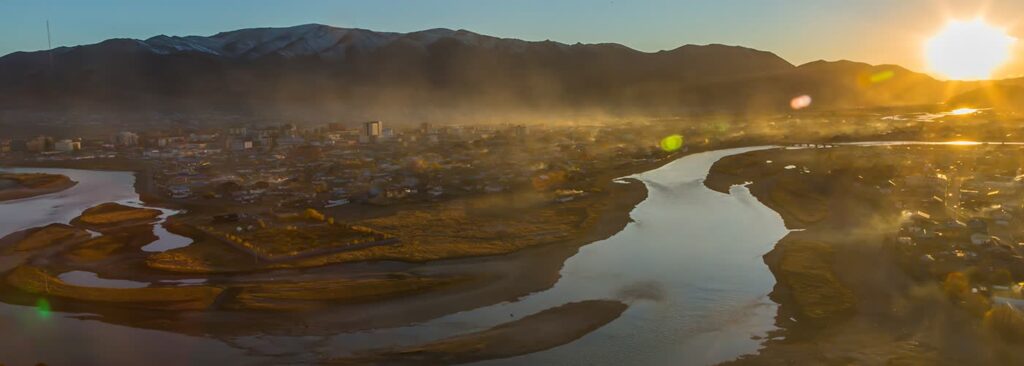
Upon arrival in Ulgii City, the gateway to Mongolia’s remote western frontier, you will be warmly welcomed by your local guide. Ulgii is the cultural heart of Mongolia’s Kazakh community and the last major settlement before entering the vast Altai wilderness.
Your first visit is to the local black market, a lively and colorful hub where nomads trade winter gear, saddles, handmade boots, furs, and daily supplies. This market offers an authentic glimpse into nomadic life and provides excellent documentary photography opportunities.
After lunch, continue to the local museum, where exhibits showcase Kazakh history, wildlife of the Altai region, traditional costumes, and the legacy of eagle hunting. The afternoon is spent exploring Ulgii at a relaxed pace, allowing time to adjust to the altitude, organize camera equipment, and rest after your flight.
In the evening, enjoy a comfortable hotel stay and a detailed expedition briefing covering safety, weather, photography strategy, and expectations for the coming days.
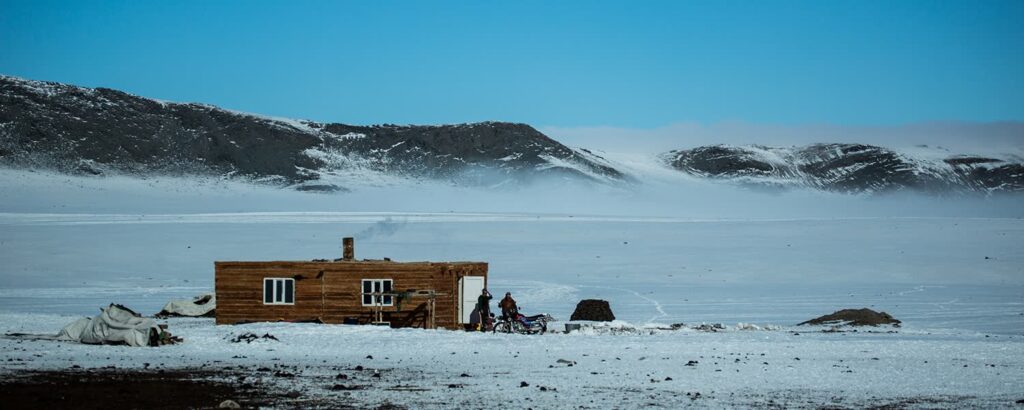
After breakfast, depart Ulgii and begin your off-road journey into the Altai Mountains, heading toward one of Mongolia’s most important Snow Leopard habitats. Leaving urban life behind, the landscape quickly transforms into wide valleys, frozen rivers, rocky slopes, and snow-covered peaks.
As you travel deeper into the mountains, the sense of isolation grows. Clear winter skies, crisp air, and untouched snowfields define the scenery. Along the way, your guide will point out wildlife tracks and explain the terrain used by Snow Leopards and their prey.
By late afternoon, arrive at a remote winter base camp, where traditional Mongolian gers have been set up and insulated for extreme cold. These gers provide warmth, shelter, and a surprisingly cozy refuge after a long travel day.
The evening includes a briefing with local rangers and guides about Snow Leopard behavior, tracking signs, and daily search strategies.
- 📏 Distance: ~200 km
- 🚙 Drive Time: ~5 hours (off-road)
- 🏕️ Accommodation: Heated ger / nomadic winter camp
- 🍽️ Meals: Breakfast, Lunch, Dinner
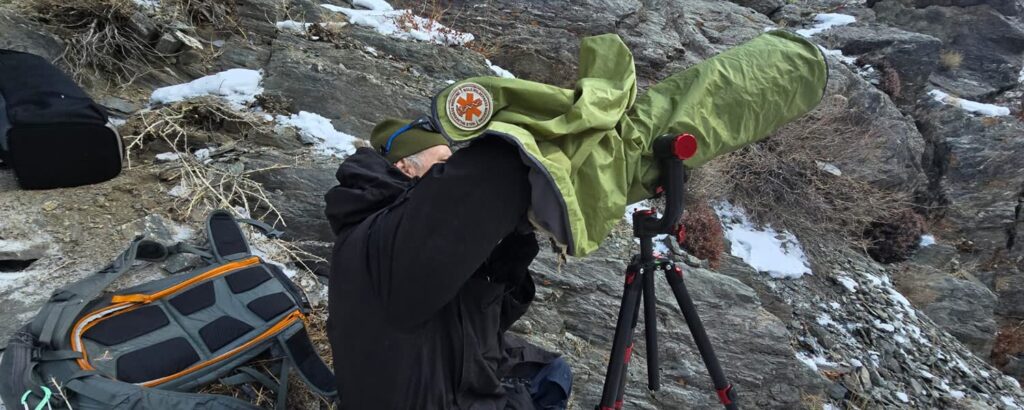
These are the core expedition days, spent searching for the elusive Snow Leopard across remote mountain terrain.
Each day follows a flexible schedule depending on weather and animal movement:
- Early morning scanning from high vantage points
- Trekking ridgelines and valleys with rangers
- Long hours glassing slopes using binoculars and spotting scopes
In addition to Snow Leopards, you may encounter:
- 🐏 Argali wild sheep
- 🐐 Siberian ibex
- 🦅 Raptors and mountain birds
Your photography guide assists with:
- Long-lens techniques
- Shooting in snow glare and low light
- Cold-weather battery and gear management
Evenings are spent in heated gers enjoying hot meals, tea, and reviewing images while listening to ranger stories of past encounters—including rare sightings of multiple Snow Leopards at once.
- 🏔️ Altitude: ~2,500–3,200 m
- 🚶 Daily hikes: 3–6 hrs (terrain dependent)
- 🏕️ Accommodation: Heated gers / winter camps
- 🍽️ Meals: Breakfast, Lunch, Dinner
(Wildlife sightings are never guaranteed, but this area has one of the highest success rates in Mongolia.)
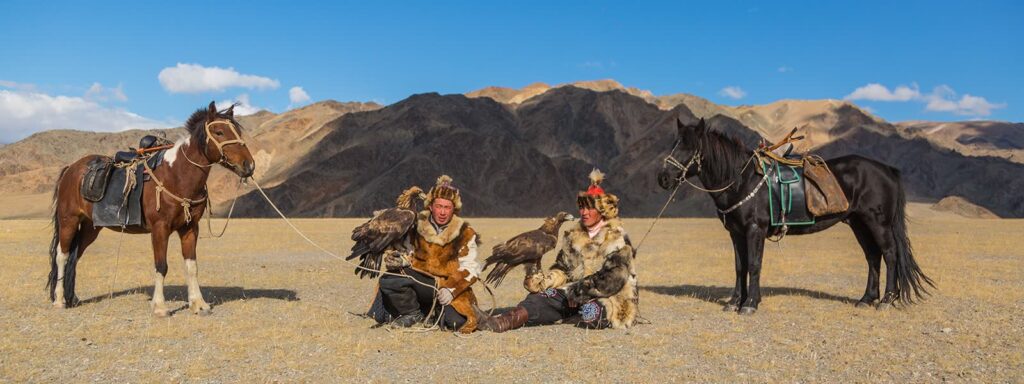
After days in the high mountains, begin the journey toward Sagsai village, home to renowned Kazakh eagle hunters. Winter is the prime season for eagle hunting, and today offers a rare opportunity to witness and photograph this ancient tradition.
Meet a skilled Berkutchi (eagle hunter) and his family, learning about the lifelong bond between hunter and golden eagle. Join the hunter as he rides into the mountains, releasing his eagle to hunt foxes, hares, or corsac. This is an authentic hunt, not staged for tourism.
Throughout the day, you’ll photograph:
- Golden eagles in flight
- Hunters in traditional fur clothing
- Horses and winter landscapes
The evening is spent with the family, sharing traditional Kazakh meals, stories, and insights into nomadic life that has endured for centuries.
- 📏 Distance: ~200 km
- 🚙 Drive Time: ~5 hours (off-road)
- 🏡 Accommodation: Eagle hunter family home
- 🍽️ Meals: Breakfast, Lunch, Dinner
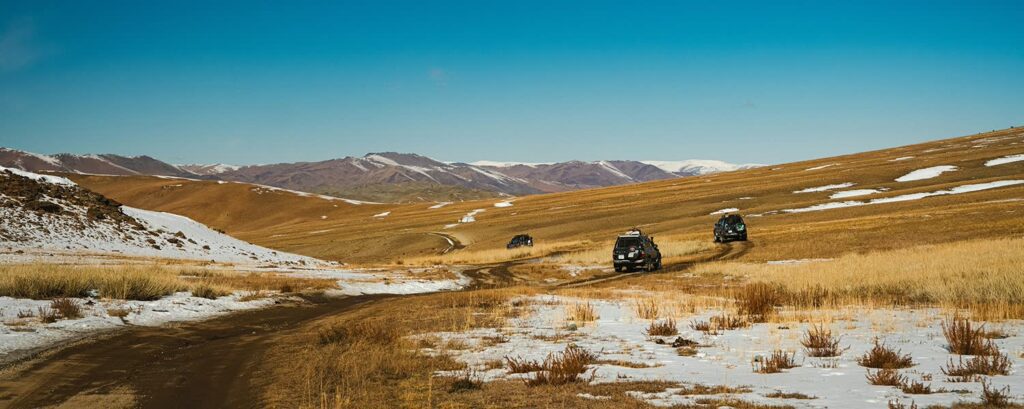
Begin the return journey to Ulgii City, gradually leaving the wild mountains behind. Upon arrival, check into a comfortable local hotel, enjoy a hot shower, and finally relax after days in extreme winter conditions.
The expedition concludes with a farewell dinner, where you can reflect on the incredible wildlife encounters, cultural experiences, and once-in-a-lifetime photographs captured during your journey into Mongolia’s winter wilderness.
- 🏨 Accommodation: Local hotel
- 🍽️ Meals: Breakfast, Lunch, Dinner
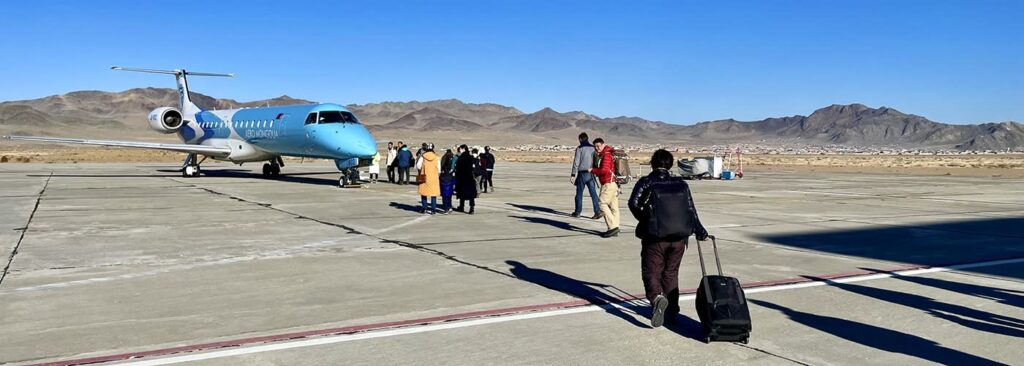
- 🍽 Meals: Breakfast
🚐 After breakfast, transfer to Ulgii Airport.
✈️ Flight back to Ulaanbaatar and end of the tour with unforgettable memories of Mongolia’s eagle hunting heritage.
🌟 Expedition Character
This is a true winter wildlife photography expedition, designed for adventurous travelers and serious photographers. Expect extreme cold, remote conditions, long observation hours—and the rare reward of witnessing one of the world’s most elusive predators in its natural environment.
🐆 A journey into silence, snow, and the realm of the Mountain Ghost.
📝 Tour Notes: Mongolian Snow Leopard Photography Tour
🐆 Deep Search Expedition: This is a true Snow Leopard tracking expedition, not a sightseeing tour. Snow Leopards are extremely elusive, and sightings require patience, long observation hours, and multiple days of searching across vast mountain terrain. Success depends on weather, fresh tracks, and wildlife movement.
🏔️ Remote & Isolated Locations: The expedition takes place in very remote areas of the Altai Mountains, far from towns or roads. Facilities are basic, conditions are harsh, and flexibility is essential. Daily plans may change based on snow, wind, visibility, and ranger advice.
❄️ Extreme Winter Conditions: Expect severe cold, with daytime temperatures around –20 to –25°C and nights dropping to –35 to –40°C. Heated gers provide shelter, but participants must be well prepared with proper winter clothing and gear.
🚶 Physical Requirements: Moderate to good physical fitness is required. Daily hikes involve uneven, snowy, and rocky terrain at high altitude. Walks are slow-paced but can last several hours while scanning and tracking.
🔭 Tracking & Observation Snow Leopard searches involve:
- Scanning cliffs and ridgelines with binoculars and scopes
- Following fresh paw prints, scrapes, and prey signs
- Long periods of still observation in cold conditions
📸 Photography Reality: Wildlife encounters are not guaranteed, but the region has a strong track record. Even without direct sightings, the expedition offers outstanding opportunities to photograph ibex, argali sheep, raptors, and dramatic winter landscapes.
🧑🤝🧑 Local Expertise: The tour is led by experienced local rangers, trackers, and guides who know Snow Leopard behavior and territory. Their knowledge significantly increases the chances of sightings while ensuring ethical wildlife observation.
⚠️ Flexibility Is Essential: Itineraries, routes, and camps may change at any time due to weather, wildlife movement, or safety considerations. Participants must be comfortable with uncertainty and expedition-style travel.
✨ Who This Tour Is For
- ✔ Serious wildlife photographers
- ✔ Adventurous travelers comfortable with cold and isolation
- ✔ Those seeking authentic, non-staged wildlife experiences
❌ Not Recommended For
- ✖ Travelers expecting guaranteed sightings
- ✖ Luxury-oriented travelers
- ✖ Those uncomfortable with cold, basic facilities, or long waits
🐆 This deep search expedition rewards patience, resilience, and respect for nature with the chance to witness one of the world’s rarest big cats in its natural realm.
⭐ Why Choose This Mongolian Snow Leopard Photography Tour
- 🐆 One of the Best Snow Leopard Habitats in Mongolia: Travel to the remote Altai Mountains, home to the country’s highest Snow Leopard density and a proven tracking area used by experienced local rangers.
- 🔍 True Deep Search Expedition: This is not a staged wildlife tour. You’ll take part in real tracking and long observation, following fresh signs and scanning vast mountain terrain—an authentic expedition experience.
- 🧭 Led by Local Experts: Work alongside local rangers, trackers, and experienced guides who understand Snow Leopard behavior, seasonal movements, and terrain—greatly increasing your chances of sightings.
- 📸 Designed for Serious Photographers: Long field days, flexible schedules, strategic vantage points, and photography guidance allow you to capture rare, natural Snow Leopard moments, not rushed encounters.
- ❄️ Winter Is the Best Season: Harsh winter conditions make tracks visible and Snow Leopards more active in lower elevations—the best time for sightings and photography.
- 🏕️ Authentic Wilderness Experience: Stay in heated gers and nomadic camps, deep in the mountains, far from roads, crowds, and artificial wildlife experiences.
- 🌍 Ethical & Low-Impact Approach: Wildlife is observed respectfully—no baiting, no chasing, no disturbance—supporting conservation and local communities.
- ✨ Once-in-a-Lifetime Opportunity: Few places on Earth offer a realistic chance to photograph the “Ghost of the Mountains” in the wild. This expedition is built for those seeking real adventure, patience, and meaning—not guarantees.
🐾 Choose this tour if you want authenticity, challenge, and the possibility of witnessing one of the world’s rarest predators in its natural home.
🎒 What to Bring: Mongolian Snow Leopard Photography Tour
❄️ Extreme Cold Clothing (Essential)
- Heavy insulated down parka (–40°C rated)
- Thermal base layers (merino wool or synthetic)
- Fleece or down mid-layers
- Insulated snow pants or expedition trousers
- Windproof & waterproof outer shell
- Warm hat covering ears + balaclava
- Insulated gloves (2 pairs) + inner liners
- Thick wool socks (3–4 pairs)
- Insulated winter boots (–40°C rated, waterproof)
🧣 Cold Protection Accessories
- Neck gaiter or scarf
- Hand & foot warmers
- Sunglasses or snow goggles (glare protection)
- High-SPF sunscreen & lip balm (sun + wind)
📸 Photography Gear
- DSLR or mirrorless camera (2 bodies recommended)
- Telephoto lens (300–600mm ideal)
- Wide-angle lens (landscapes & camps)
- Sturdy tripod or monopod
- Extra batteries (cold drains power fast)
- Large memory cards / portable storage
- Lens cleaning kit (snow & dust protection)
🔋 Power & Electronics
- Power banks (high-capacity)
- Headlamp or flashlight (extra batteries)
- Universal travel adapter
- Phone or satellite device (optional)
🎒 Personal & Travel Items
- Small daypack (20–30L)
- Reusable water bottle or thermos
- Personal medications & basic first-aid kit
- Toiletries & wet wipes
- Quick-dry towel
- Snacks (energy bars, nuts, chocolate)
📄 Documents & Miscellaneous
- Passport & visa (if required)
- Travel insurance (mandatory)
- Notebook or journal
- Cash in small denominations
⚠️ Important Notes
- Clothing quality is critical—renting or borrowing expedition gear is not recommended
- Layering is key for long observation periods in extreme cold
- Keep batteries inside clothing to preserve power
🐆 Proper preparation ensures safety, comfort, and the ability to stay focused during long hours searching for the Mountain Ghost.
❓ FAQs: Mongolian Snow Leopard Photography Tour
🐆 What are the chances of seeing a snow leopard?
There is no definitive answer, as snow leopard sightings are rare and unpredictable. However, your chances in Mongolia are among the highest in the world. Mongolia hosts a significant portion of the global snow leopard population, and this expedition takes place in proven habitats with experienced local trackers. While sightings can never be guaranteed, your odds here are better than in most other regions.
🏔️ What makes a snow leopard special?
Snow leopards are one of the most beautiful and elusive big cats on Earth. Often called the “Ghost of the Mountains,” they live solitary lives in remote, high-altitude terrain across Central Asia. Despite being apex predators, their populations are declining due to habitat loss and human conflict—making every sighting exceptionally meaningful.
🧍 Are snow leopards friendly or dangerous to humans?
Snow leopards are not aggressive toward humans. They are shy, reclusive animals that actively avoid people. Aggression would only occur if a leopard felt severely threatened or if its cubs were in danger. There has never been a verified snow leopard attack on a human. Even when disturbed at a kill site, a snow leopard is far more likely to flee than confront.
❄️ Is winter really the best time to search for snow leopards?
Yes. Winter provides the best tracking conditions—snow reveals footprints, and prey animals move to lower elevations, increasing leopard activity and visibility.
🚶 Do I need to be physically fit?
Yes. Moderate to good fitness is required. Daily activities involve hiking on snowy, uneven terrain at high altitude and long hours of observation in cold conditions.
📸 Is this tour suitable for non-photographers?
The tour is designed primarily for photographers, but wildlife enthusiasts who enjoy patient observation and rugged travel will also find it rewarding.
🏕️ What kind of accommodation should I expect?
You will stay in heated traditional gers and nomadic camps in remote mountain areas, and local hotels in Ulgii. Comfort is basic but warm and suitable for winter expeditions.
🔋 Will there be electricity or internet?
Electricity and internet are available only in Ulgii. In the mountains, expect no signal and limited power, so power banks are essential.
⚠️Is the itinerary fixed?
No. This is a deep search expedition. Routes, camps, and daily plans may change based on weather, wildlife movement, and ranger recommendations.
🐾 This expedition is about patience, realism, and respect for nature—offering a rare chance to encounter one of the world’s most mysterious predators in its true home.