
🎤 Throat Singing (Khöömei) in Western Mongolia
The Voice of the Mongolian Steppe
🎤 Throat Singing (Khöömei) in Western Mongolia
Throat singing, locally known as khöömei (or höömii), is one of Mongolia’s most distinctive and ancient vocal traditions. It originated among the nomadic and indigenous peoples of the Altai and Sayan Mountain regions, including western Mongolia, where it has been practiced for over a thousand years as both a musical art and a cultural expression.
🗻 What Is Khöömei?
Throat singing is a highly specialized vocal technique in which a singer produces a deep fundamental drone and simultaneously amplifies overtones, creating the impression of two or more harmonics at the same time. This creates otherworldly sounds—sometimes flute‑like or whistle‑like melodies—floating above a low, steady tone.
The technique reflects deep connections to the landscape of western Mongolia, imitating the sounds of wind, water, birds, and animals in the vast open steppe and high mountains.
🎶 Cultural Roots & Meaning
Throat singing has deep cultural significance in western Mongolia’s nomadic societies:
- 🐎 Originally used by shepherds and herders to communicate with flocks and soothe animals
- 🌿 Reflects respect for nature, the spirits of place, and ancestors
- 🎉 Performed at major community events—horse races, archery and wrestling festivals, banquets, rituals, and sacrifices
- 🌀 Traditionally tied to ritual and spiritual practices in ancient nomadic life
During the 20th century, such traditions were discouraged under communist rule. But since the 1990s, throat singing has experienced a revival as a national art form taught in schools, performed publicly, and celebrated in festivals.
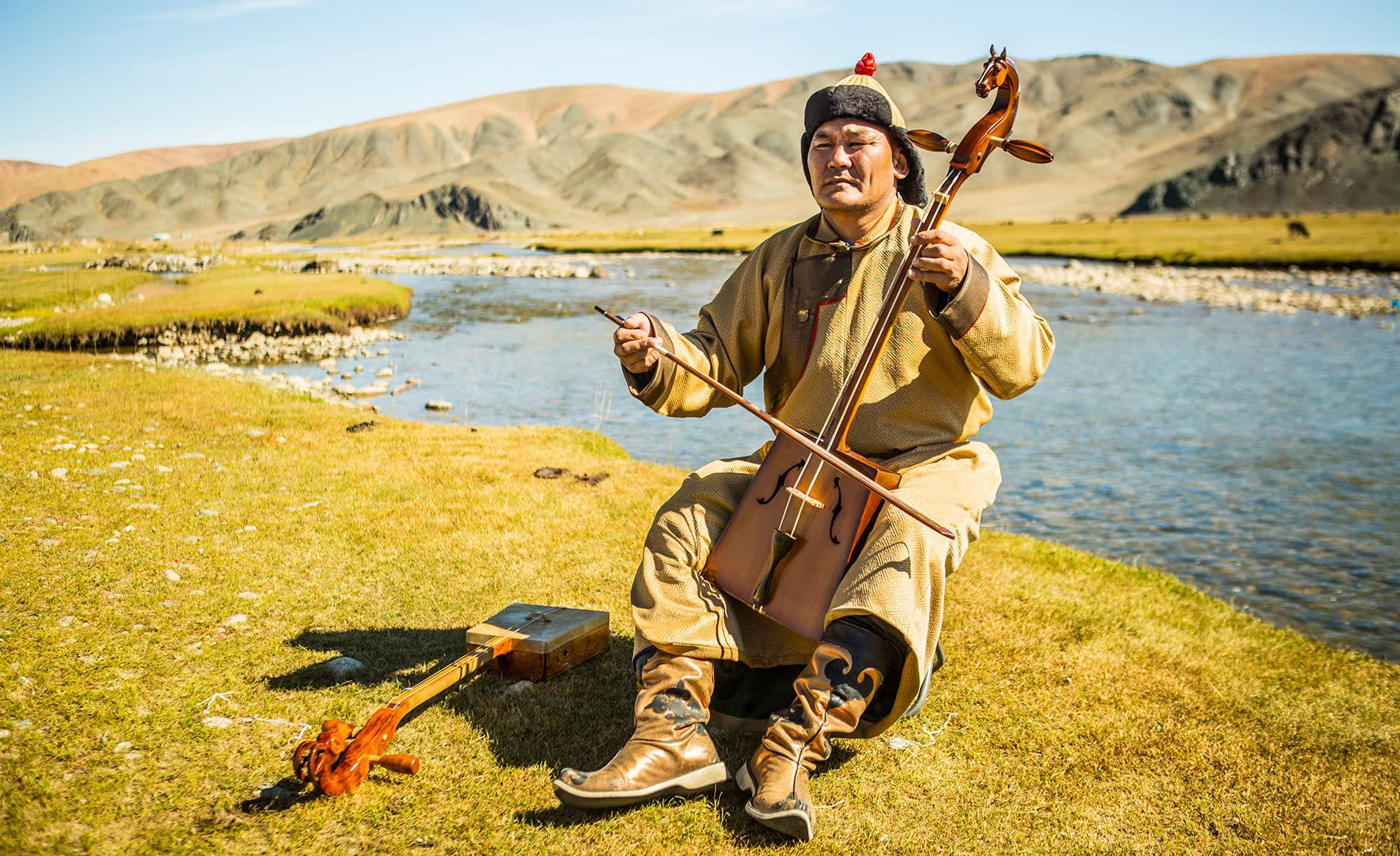
🎤 Styles of Khoomii
There are different throat singing styles practiced in western Mongolia, distinguished by the way the voice is shaped and which harmonics are emphasized:
- Kharkhiraa – Deep, growling undertone beneath the drone
- Isgeree (sygyt) – Whistle‑like overtone melody above the drone
- Other variations classified by resonance in the throat, nasal, palatal, or chest cavity
Each style has its own character and requires precise breath control and vocal technique.
👤 Khoomei in Bayan‑Ölgii & Tsengel
Western Mongolia’s Bayan‑Ölgii Province, especially around Tsengel near the Altai Mountains, is a living center of throat singing. Talented singers like Batsükh Dorj, born in Tsengel, are modern custodians of this art—mastering multiple khöömei styles including khöömei, sygyt, kargyraa (deep overtones), ezengileer, and borbagnadyr—and performing at cultural festivals and competitions across Mongolia and internationally.
These practitioners often combine throat singing with traditional instruments like the igil fiddle, doshpuluur lute, and khomus (mouth harp), and participate in folk and nomadic music festivals, keeping the tradition vibrant and evolving.
🌏 Why It Matters
Throat singing is not just music—it’s a symbol of identity, landscape, and heritage. It expresses:
- 🐴 A connection to nomadic life and the natural world
- 🌀 A blend of ancient soundscapes and spiritual harmony
- 🎼 A shared cultural bond across Mongolia, Tuva, and Inner Asia
UNESCO recognizes throat singing as an important intangible cultural heritage, highlighting its role in representing the aesthetic and philosophical values of Mongolian culture.
🎧 Experience Khoomii
Today, visitors to western Mongolia can hear throat singing at:
- ✨ Local festivals and cultural events
- 🐎 Naadam competitions and celebrations
- 🏡 Family gatherings and evening campfires
- 🎶 Workshops and performances in Ölgii and Tsengel
Whether heard in a festival arena or the quiet of an Altai valley, khöömei evokes the spirit of Mongolia’s vast landscapes and nomadic heart—one voice echoing with centuries of tradition.