
🦅 Kazakh Eagle Hunters (Berkutchi) of the Mongolian Altai
An Ancient Hunting Tradition Kept Alive in Bayan-Ölgii
🏹 Who Are the Berkutchi?
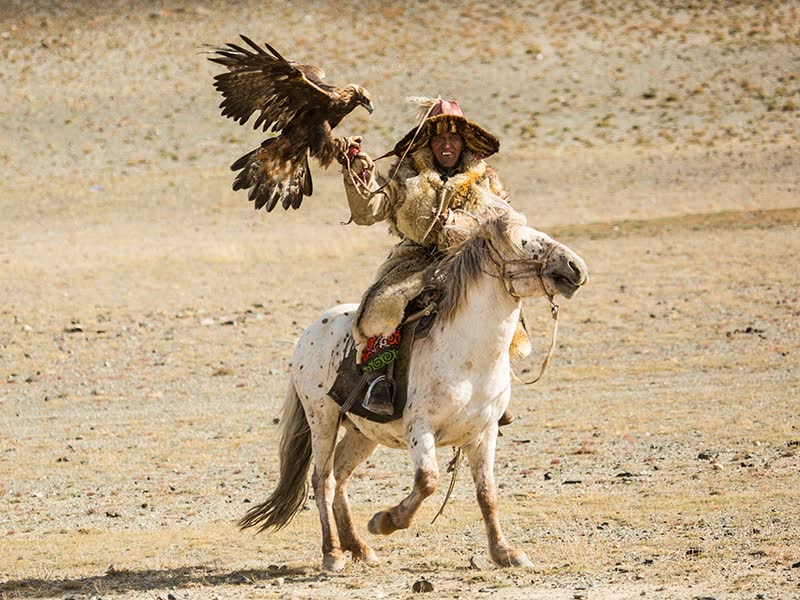
Kazakh eagle hunters, known as Berkutchi, practice one of the world’s most extraordinary and ancient hunting traditions. Using trained Golden Eagles, these hunters pursue foxes, hares, and other small animals across the frozen steppes and mountains of western Mongolia.
Today, the strongest and most authentic continuation of this tradition survives in Bayan-Ölgii Province, where the culture has been preserved through isolation, resilience, and deep respect for nature.
🦅 Capturing & Choosing the Eagle
Berkutchi traditionally capture wild Golden Eagles either:
- 🪺 As chicks from nests, or
- 🪢 As adolescent eagles using a rope net called torr
Why Female Eagles?
Hunters prefer female eagles under seven years old because:
- Wingspan can reach 2.2 meters (8 ft)
- Females are larger and stronger than males
- They are more loyal and easier to train
- A female Golden Eagle can weigh up to 7 kg (15 lbs)
🤝 Bonding & Training the Eagle
After capture, the eagle undergoes a bonding period:
- ⏳ The bird is kept without food for several days
- 🍖 It is then hand-fed, creating trust
- 🐎 The eagle becomes familiar with the hunter’s horses and dogs
Training Process
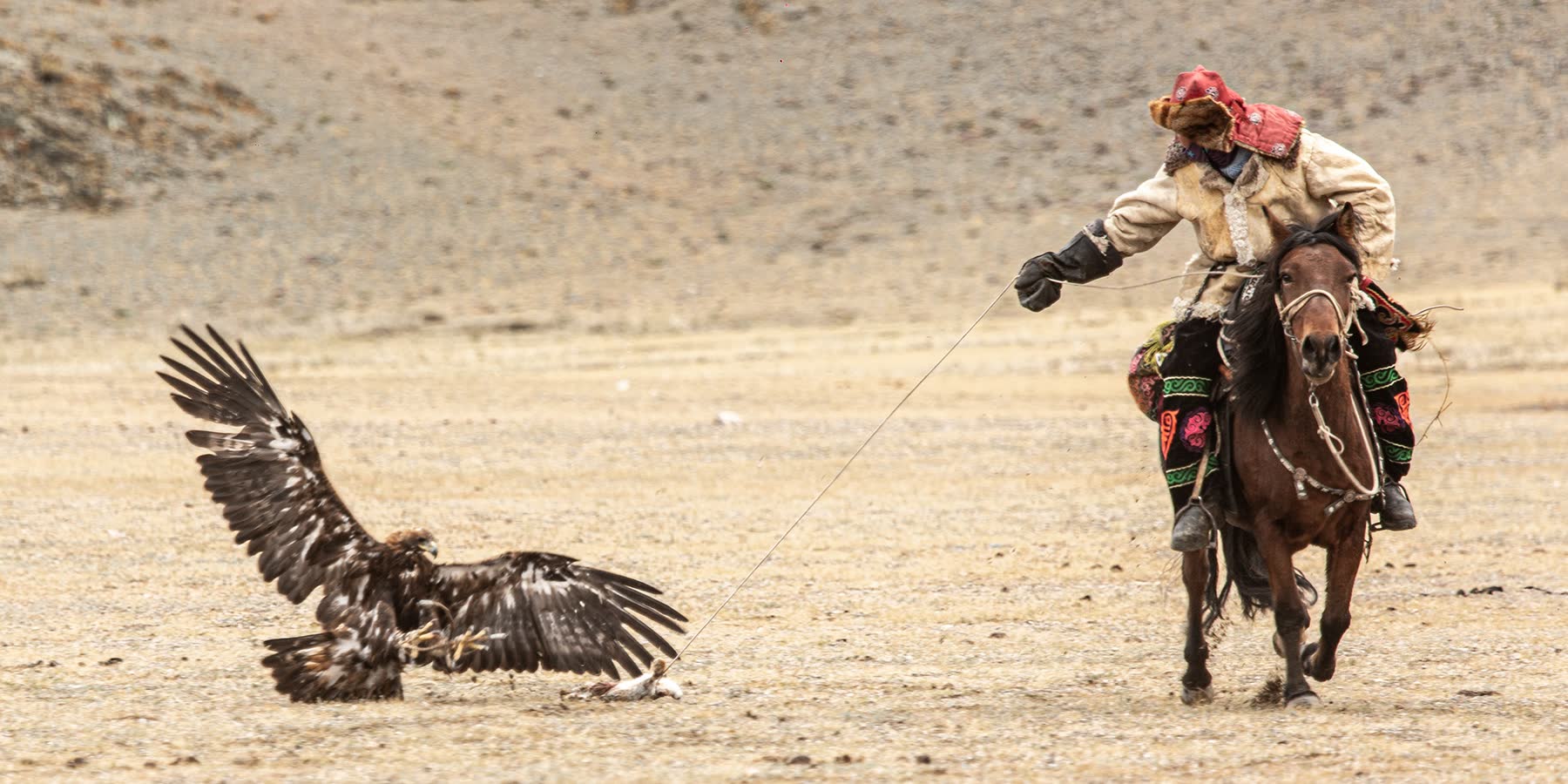
Training begins using a method called shakhyru, where:
- 🦊 Fox fur is dragged by hand or from horseback
- The eagle learns to chase, strike, and return
- Skills are refined through repetition and patience
❄️ The Winter Hunt
Eagle hunting only takes place during winter months, when:
- ❄️ Fox, rabbit, and hare fur is thick and valuable
- 🌬️ Cold weather preserves prey
- 🐎 Hunters can travel across snow-covered terrain
Despite Golden Eagles living over 30 years, Berkutchi will typically keep an eagle for around 10 years, after which it is released back into the wild to breed.
🕰️ History of Eagle Hunting & Falconry
- 🦅 Eagle hunting: ~1,000 years old
- 🐦 Falconry in Central Asia: ~6,000 years old
Falconry spread to Europe and China only after the Mongol Empire under Chinggis Khaan in the 13th century. Historical records suggest:
- Chinggis Khaan owned 1,000 hunting birds, including eagles, falcons, and gyrfalcons
🚫 Suppression & Survival
- 🏰 1860s: Russian expansion suppressed nomadic warrior traditions
- ❄️ Many Kazakhs fled to remote border regions of Mongolia & western China
- ☭ Under Stalin and Mao, eagle hunting was nearly eliminated in the USSR and China
The isolated region of Bayan-Ölgii, Mongolia, became the last stronghold where eagle hunting continued uninterrupted.
🎉 Festivals & Visiting Eagle Hunters
Increased awareness through tourism and documentaries has brought renewed attention to this tradition.
🗓️ Golden Eagle Festivals
- Held late September & October
- Hunters compete in:
- Calling eagles from long distances
- Fox fur hunting simulations
- Traditional Kazakh games
🏕️ Visiting an Eagle Hunter
With a local guide, travelers can:
- In winter, experienced riders may witness a real hunt
- Visit eagle hunters in the countryside
- Learn about training and daily life
- Photograph eagles and hunters
🌍 Eagle Hunting Today
Today:
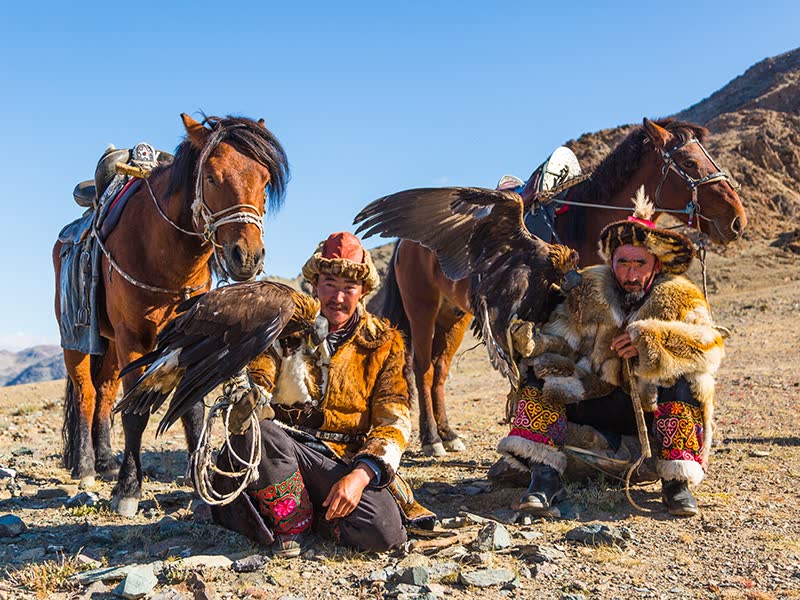
- 🇲🇳 250+ active eagle hunters in Bayan-Ölgii & Hovd Aimags
- 🇰🇿 ~40 mostly ceremonial hunters in Kazakhstan
- 🇨🇳 Eagle hunting is illegal in Kazakh regions of China
- 🇰🇬 Small communities remain in Kyrgyzstan
Bayan-Ölgii remains the global center of living eagle hunting culture.
✨ Kazakh Eagle Hunting at a Glance
- 🦅 Bird: Golden Eagle (Aquila chrysaetos)
- 🧑🌾 Hunter: Berkutchi
- ❄️ Season: Winter only
- ⏳ Eagle kept: ~10 years
- 📍 Cultural heart: Bayan-Ölgii, Mongolia
⭐ Why This Tradition Matters
- ✔ One of the world’s last living hunting cultures
- ✔ Deep respect between human and predator
- ✔ Unique blend of nomadic life & wildlife
- ✔ Preserved only in western Mongolia
- ✔ A once-in-a-lifetime cultural experience