
🏔️ Khuiten Peak
Mongolia’s Highest Summit in the Altai Tavan Bogd Mountains
Khuiten Peak (Khuiten Uul) – Mongolia’s Highest Mountain in Altai Tavan Bogd
Khuiten Peak (Khuiten Uul), meaning “Cold Peak” in Mongolian, is the highest mountain in Mongolia, rising to 4,374 meters (14,201 ft) above sea level. It is located in Altai Tavan Bogd National Park, in the far western corner of the country, where Mongolia, China, Russia, and Kazakhstan come close together.
Khuiten Peak is part of the legendary Tavan Bogd massif, known as the “Five Sacred Peaks”, and offers climbers views into three countries from the summit on clear days.
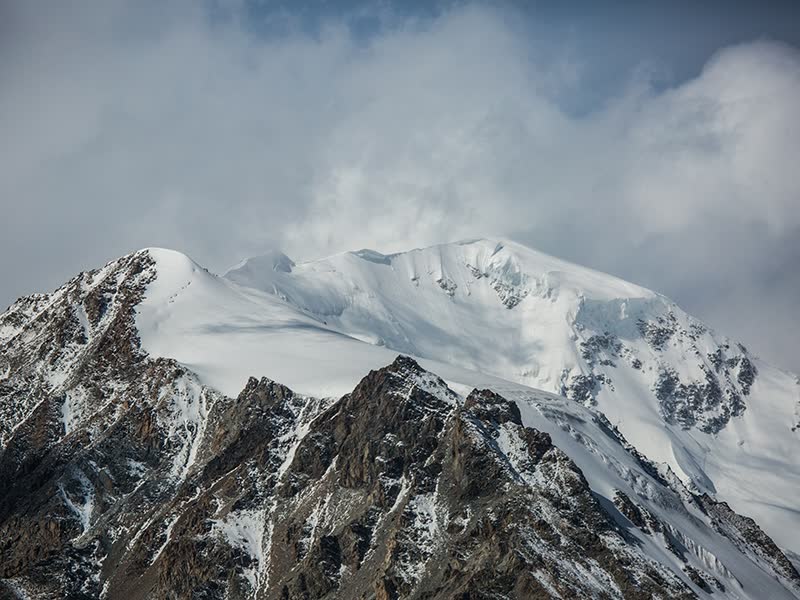
🏞️🏔️ The Five Sacred Peaks (Tavan Bogd)
Khuiten Peak dominates the Tavan Bogd Mountains, which include the five highest peaks in Mongolia. These mountains are considered sacred by local Kazakh and Tuvan communities, and climbing them is treated with deep respect.
The massif is characterized by:
- Permanent snowfields
- Massive glaciers
- Sharp ridgelines and high-altitude passes
Khuiten Uul stands as the spiritual and geographical pinnacle of Mongolia.
❄️ Glaciers & High-Altitude Environment
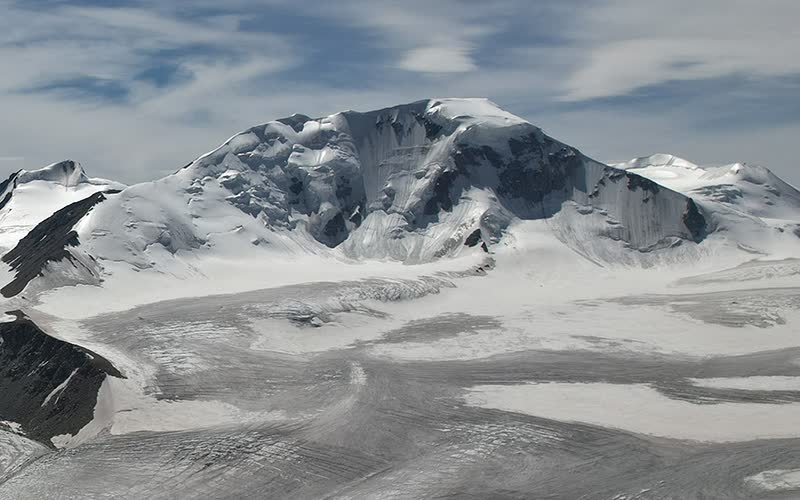
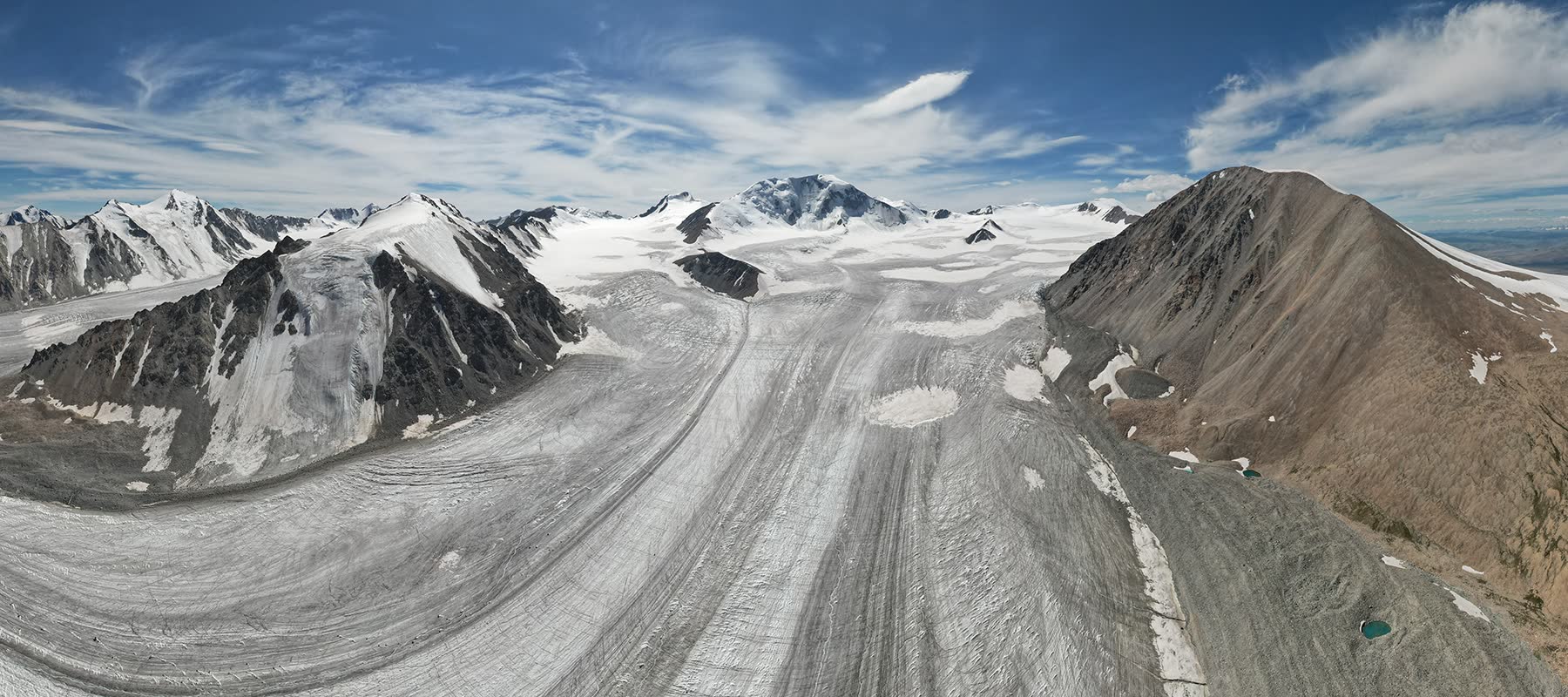
Khuiten Peak rises above the vast Potanin Glacier, the largest glacier in Mongolia, which flows from the heart of the Tavan Bogd massif.
- 🧊 Extensive glacial terrain
- ❄️ Year-round snow and ice
- 🌬️ Extremely cold and windy conditions
- 🏔️ Dramatic icefalls and crevasses
The mountain’s name reflects its climate—temperatures can drop well below freezing even in summer.
🧗 Mountaineering & Climbing
Climbing Khuiten Peak is a serious mountaineering objective and should only be attempted by experienced climbers.
🧗 Climbing Facts
- 🏔️ Elevation: 4,374 m
- 🧊 Requires crampons, ice axe, ropes
- 🧭 Glacier travel and crevasse navigation required
- ⛺ Multi-day expedition with high camps
The standard route approaches via Potanin Glacier, with base camps established deep inside Altai Tavan Bogd National Park.
🥾 Trekking for Non-Climbers
Even if you do not plan to summit, the area around Khuiten Peak offers unforgettable experiences:
- 🥾 Trekking to Tavan Bogd Base Camp
- 🧊 Hiking along the edge of Potanin Glacier
- 🏕️ Camping beneath snow-covered peaks
- 📸 High-alpine photography
These routes allow travelers to experience Mongolia’s highest mountains without technical climbing.
🐾 Wildlife & Nature
The remote environment around Khuiten Peak supports rare Altai wildlife:
- 🐆 Snow leopard (very rare)
- 🐏 Argali sheep
- 🐐 Siberian ibex
- 🦅 Golden eagles & lammergeiers
Wildlife sightings are uncommon but possible in quieter valleys and early mornings.
🚙🐎 Cultural Significance
Khuiten Peak is revered by Kazakh and Tuvan nomads, who consider the mountain spiritually powerful.
- Sacred mountain rituals
- Traditional respect for high peaks
- Seasonal grazing in lower valleys
Many climbers and trekkers follow local customs, such as offering stones or prayers, before approaching the mountain.
🚙 Access & Logistics
- Access via Ölgii town (Bayan-Ölgii Province)
- Long 4WD off-road travel required
- Multi-day approach trek or horse-supported expedition
- No permanent facilities – full expedition logistics needed
Most climbers join organized expeditions with local guides and support teams.
📅 Best Time to Climb
| Season | Conditions |
|---|---|
| July – August | Best climbing window |
| June & September | Possible but colder, riskier |
| October – May | Extreme cold, not suitable |
- 👉 Peak season: Late July to mid-August
✨ Khuiten Peak at a Glance
- 🏔️ Height: 4,374 m (14,201 ft)
- 📍 Location: Altai Tavan Bogd National Park
- 🧊 Climbing type: Glaciated alpine ascent
- 🥾 Trekking access: Yes
- ⛺ Accommodation: Camping only
⭐ Why Khüiten Peak Matters
- ✔ Highest point in Mongolia
- ✔ Sacred mountain of the Altai
- ✔ Part of a UNESCO-listed cultural landscape
- ✔ Challenging, remote, and prestigious summit
- ✔ One of Central Asia’s great mountaineering goals